


Education, Environment
WCR Uses Technology to Help Track Cattle Moves and Pasture Condition
Nov
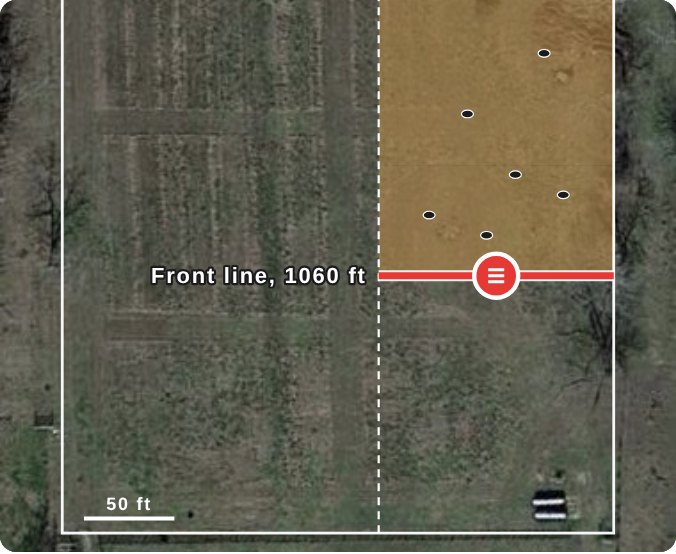
Our crew members make daily trips to Willow Creek Ranch to move the polywire line forward and give the cattle fresh grass. The line is a single strand of polywire mounted on Gallagher tumble wheels that we modified to stand on their own. Each wheel has two sets of legs and a center rod, allowing one person to roll the entire line ahead without pulling posts. The distance and frequency of the line movement depend on factors like grass quality, soil conditions, and the cattle’s body condition. Over a season, these moves become the single most significant contribution we make to the soil health here. That’s why we decided to keep a detailed record of them. This post explains our process and the reasons behind it. It’s the practical side of our grazing plan that we share on this site.
Why the cattle move every day
Our main pasture is a long rectangle divided in half by a fence line. The herd moves southward along one side, strip by strip, then turns to the other side at the far end and returns northward. A single-strand front line ensures they graze on fresh grass, while a back line a few days behind prevents them from grazing on the recently grazed area, allowing the plants to regrow before being eaten again.
This rest period is the key to the pasture’s health. Grass that is grazed once and then left alone for weeks develops deeper roots, nourishes the soil life, and retains water better than grass that is nibbled daily. The herd consumes the best of each strip, tramples the rest into the ground, and distributes its manure and urine evenly instead of piling it around a water trough. Consistent with this practice, a pasture can build topsoil instead of losing it, which encapsulates the essence of regenerative agriculture in a single sentence. We don’t use synthetic fertilizer, herbicide, or pesticide on our land, making the cattle, the rest period, and the chickens that follow them the primary components of the program.
The Grazing Log
A grazing plan only works if the moves actually happen, on the right day, and somebody knows when they did not. With several people sharing the chores, a paper list in the barn won’t cut it. So we built a simple web application, the Grazing Log, that the crew opens on their phones. It takes a few seconds to use: pick your name, tap the chore when it is done. Behind it is nothing fancier than a spreadsheet, which is exactly what we wanted.
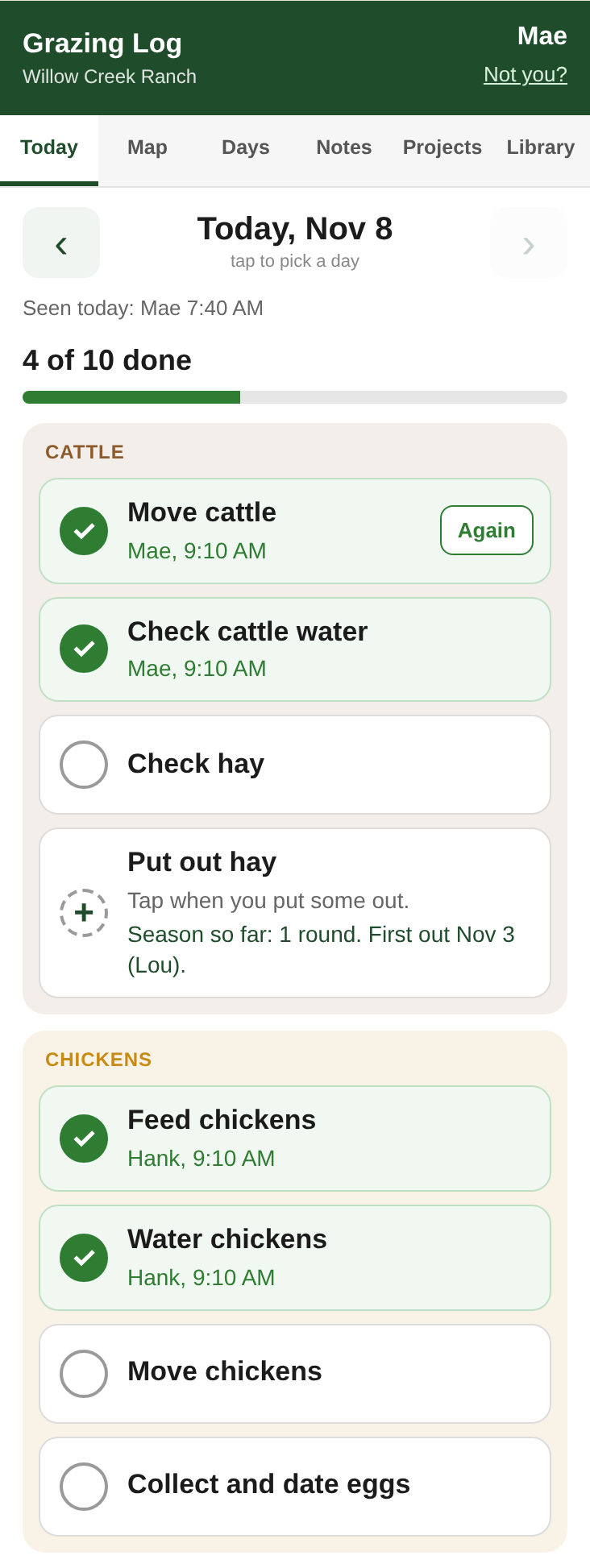
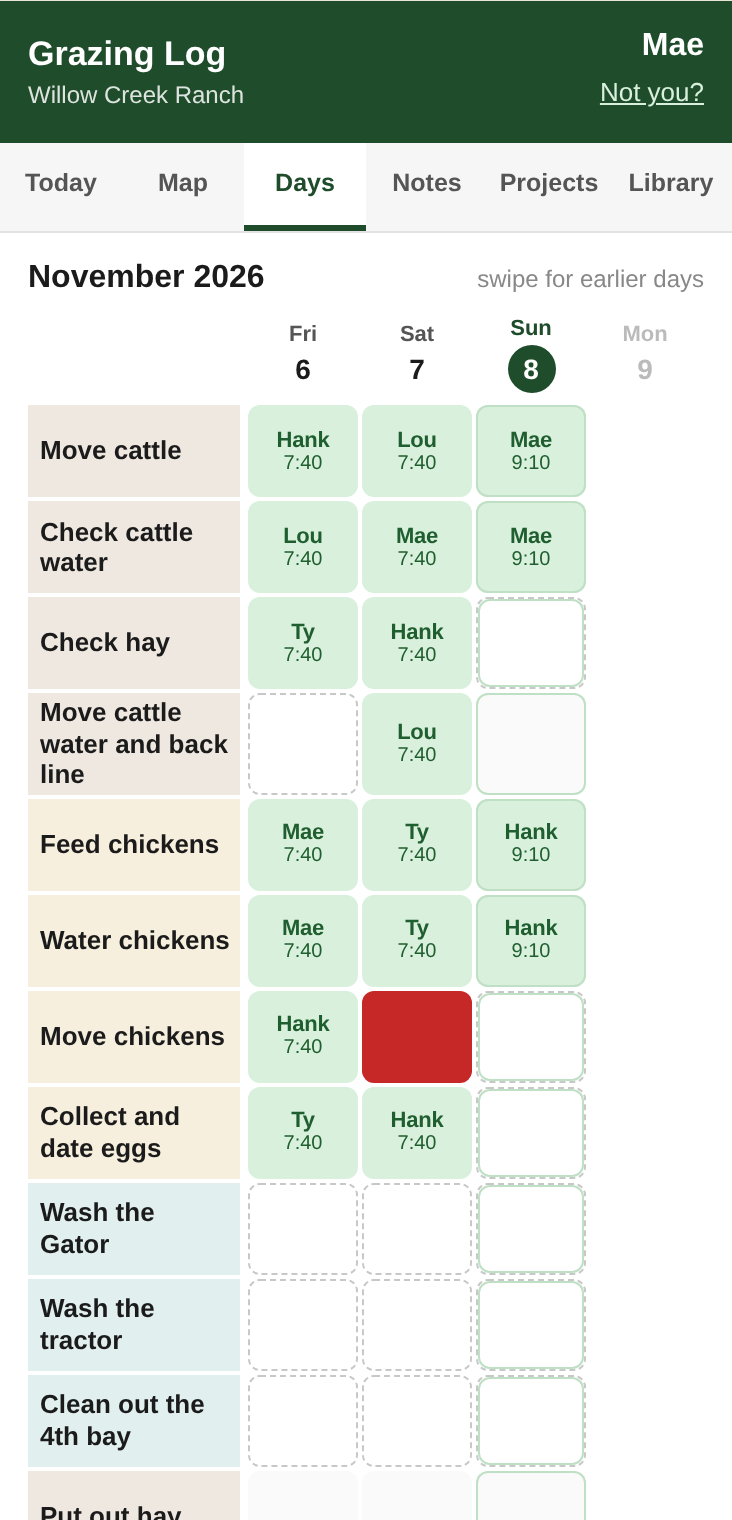
Each tap records who did it and when, and the cattle and chicken moves also save the phone’s GPS position. Nothing counts as late until the evening, and whatever is still open at six gets flagged in red and lands in an email summary that night. The Days tab shows the last week at a glance, one column per day, so a missed water check or a day the chickens did not move is obvious the next morning rather than a mystery a month later.
A map of where the herd has been
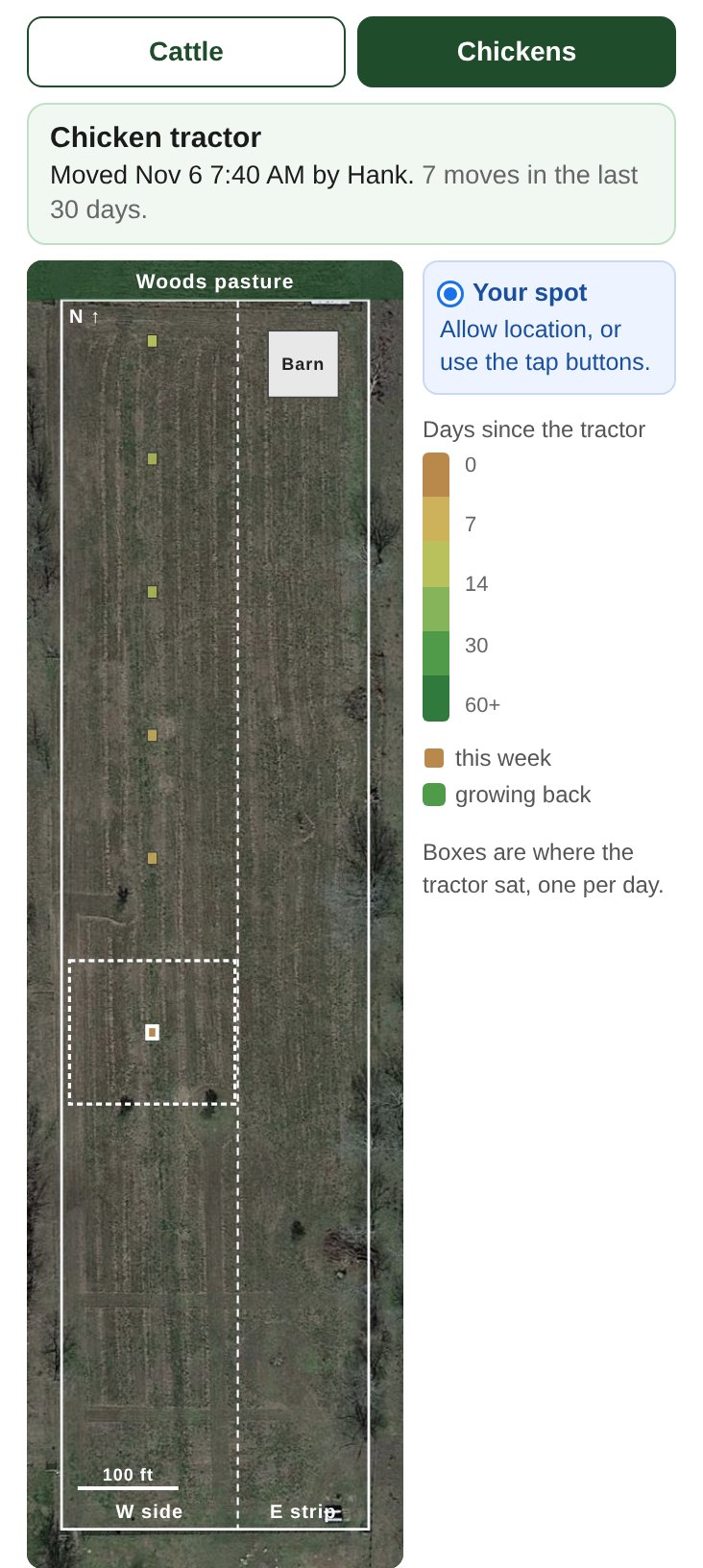
The part we are most pleased with is the map. When the crew moves the front line, they either stand on the new line and tap “use my spot,” or tap the spot on an aerial photo of the pasture. A phone’s GPS fix is good to roughly 10 to 15 feet out in the open, which puts the line within a few steps of where the person stood; when it needs to be tighter, tapping the aerial places it to within a few feet. The log turns either one into a position in feet from the north fence and draws the line. Every move opens a new strip on the map, and the strips are shaded by how many days it has been since the herd grazed there, from brown for this week through to dark green for sixty days or more.
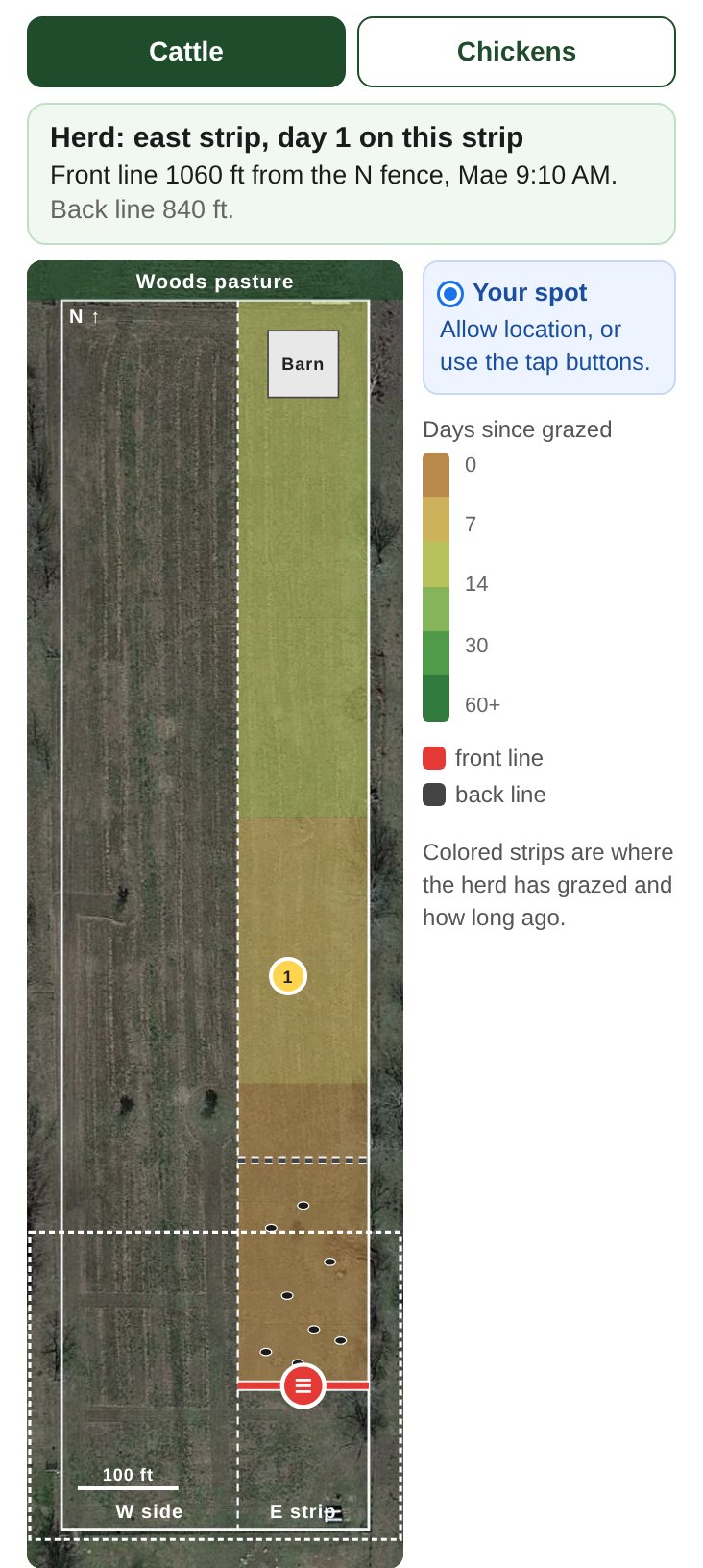
That shading is our rest record. It answers the two questions that matter most in a rotation: how long ago was this ground grazed, and how long until the herd comes back around. When the strips ahead of the herd are still pale, the grass has not had enough time and the moves need to get bigger or slower. When everything behind the herd has gone dark green, we are in good shape.
The chickens follow the cattle
Our laying hens live in a tractor, a coop on skids that gets pulled to fresh ground every day. It follows a few days behind the cattle on purpose. The hens scratch through the cow pats, spread them out, clean up the fly larvae, and add their own fertility on top. The map keeps a trail of where the tractor has sat over the last month, one box per day, so we can see that it really is trailing the herd and not parked in one corner.
Watching the grass and the animals
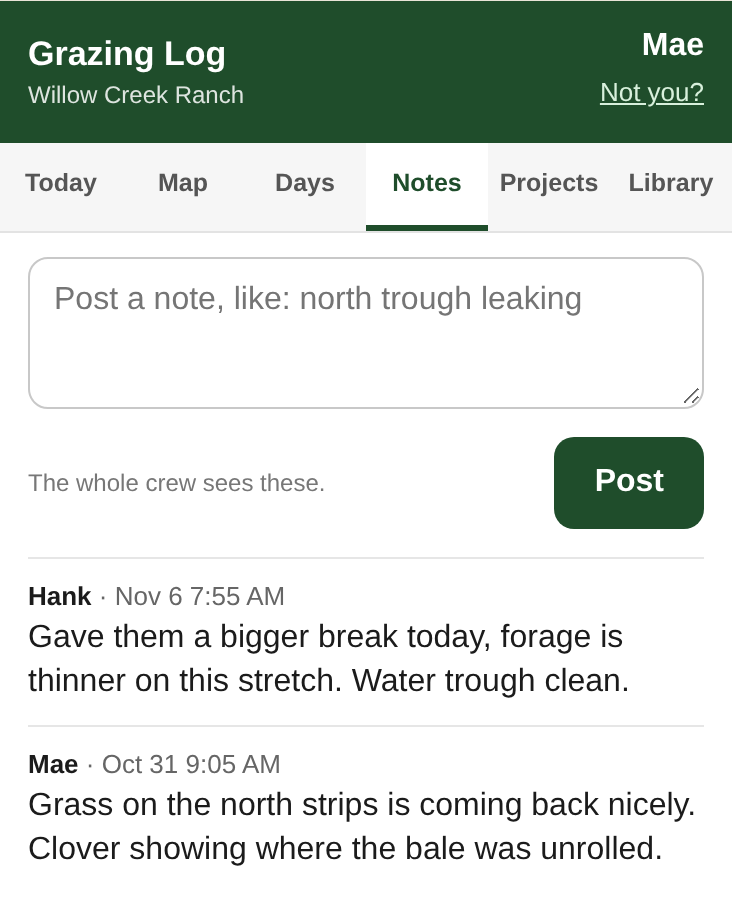
Because somebody is at the herd every single day, every move is also an inspection. The same person who moves the wire is looking at whether the cattle are content and full, whether the water is clean, and what the grass looks like in front of them and behind them. The log has a Notes tab for exactly that: a quick line that the whole crew sees, so “forage is thin on this stretch, gave them a bigger break” or “clover coming in where the bale was” gets written down the day it is noticed rather than remembered a season later.
Winter changes the pattern without changing the idea. Early on, the herd spends time in the wooded pasture off the north end and the hay goes out there. Once the rye, brassicas and clover start growing, the cattle come back into the main pasture and rotate through it again, and we often bale graze as we go, rolling bales out across different areas of the pasture instead of feeding in one spot. Each unrolled bale leaves behind the hay the cattle did not eat, their manure and urine, and the seed that was in the bale, so that ground picks up organic matter, fertility and a fresh seeding all at once. The log records every bale, what kind it was and where it was set, and it keeps a season tally of what has been fed, so the map doubles as a record of where the fertility went.
What it adds up to
None of this is complicated, and that is the idea. A phone, a spreadsheet, and an aerial photo give us a daily log of where the cattle and chickens were, how long each piece of ground has rested, what the crew saw, and what went out as hay. Over a year that log becomes the grazing history of the farm, and it is the record behind the claims on our labels: grass fed and finished, pasture raised, moved daily, no herbicides or pesticides, soil getting better rather than worse.
If you buy a half cow or a dozen eggs from us, this is what is happening behind them. If you run a small herd yourself and want to know more about how the log is put together, send us a note.